PETS
PETS
Showing posts with label science. Show all posts

Wednesday, June 24, 2009

You can catch MRSA from animals

An infectious superbug, a strain of bacteria known as MRSA, which has evolved a resistance to antibiotics, has long plagued hospitals but in recent years has become more common in homes. About two years ago, scientists began to suspect that pets can spread this bacteria.

In the July edition of The Lancet Infectious Diseases, Richard Oehler of the University of South Florida College of Medicine and colleagues lay out the latest thinking on MRSA (methicillin-resistant Staphylococcus aureus) and pets.

The infections can be transmitted by animal bites and most threaten young children, the researchers note. "MRSA colonization has been documented in companion animals such as horses, dogs, and cats, and these animals have been viewed as potential reservoirs of infection."

"Bites to the hands, forearms, neck, and head have the potential for the highest morbidity," the scientists warn. They conclude: "Much more remains to be learned about MRSA and pet-associated human infections."

Source

Photo from Flickr, by GrahamIX
You can catch MRSA from animals

An infectious superbug, a strain of bacteria known as MRSA, which has evolved a resistance to antibiotics, has long plagued hospitals but in recent years has become more common in homes. About two years ago, scientists began to suspect that pets can spread this bacteria.

In the July edition of The Lancet Infectious Diseases, Richard Oehler of the University of South Florida College of Medicine and colleagues lay out the latest thinking on MRSA (methicillin-resistant Staphylococcus aureus) and pets.

The infections can be transmitted by animal bites and most threaten young children, the researchers note. "MRSA colonization has been documented in companion animals such as horses, dogs, and cats, and these animals have been viewed as potential reservoirs of infection."

"Bites to the hands, forearms, neck, and head have the potential for the highest morbidity," the scientists warn. They conclude: "Much more remains to be learned about MRSA and pet-associated human infections."

Source

Photo from Flickr, by GrahamIX
You can catch MRSA from animals

An infectious superbug, a strain of bacteria known as MRSA, which has evolved a resistance to antibiotics, has long plagued hospitals but in recent years has become more common in homes. About two years ago, scientists began to suspect that pets can spread this bacteria.

In the July edition of The Lancet Infectious Diseases, Richard Oehler of the University of South Florida College of Medicine and colleagues lay out the latest thinking on MRSA (methicillin-resistant Staphylococcus aureus) and pets.

The infections can be transmitted by animal bites and most threaten young children, the researchers note. "MRSA colonization has been documented in companion animals such as horses, dogs, and cats, and these animals have been viewed as potential reservoirs of infection."

"Bites to the hands, forearms, neck, and head have the potential for the highest morbidity," the scientists warn. They conclude: "Much more remains to be learned about MRSA and pet-associated human infections."

Source

Photo from Flickr, by GrahamIX
Monday, June 22, 2009

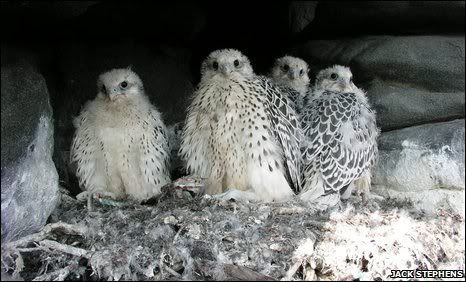
2,500-year-old bird's nest found

A 2,500-year-old bird's nest has been discovered on a cliff in Greenland.

The nesting site is still continually used by gyrfalcons, the world's largest species of falcon, and is the oldest raptor nest ever recorded.

Three other nests, each over 1,000 years old, have also been found, one of which contains feathers from a bird that lived more than 600 years ago.

Like many falcons, gyrfalcons do not build nests out of sticks and twigs, but typically lay eggs in bowl-shaped depressions they scrape into existing ledges or old nests made by other birds such as ravens.

Source

2,500-year-old bird's nest found

A 2,500-year-old bird's nest has been discovered on a cliff in Greenland.

The nesting site is still continually used by gyrfalcons, the world's largest species of falcon, and is the oldest raptor nest ever recorded.

Three other nests, each over 1,000 years old, have also been found, one of which contains feathers from a bird that lived more than 600 years ago.

Like many falcons, gyrfalcons do not build nests out of sticks and twigs, but typically lay eggs in bowl-shaped depressions they scrape into existing ledges or old nests made by other birds such as ravens.

Source

2,500-year-old bird's nest found

A 2,500-year-old bird's nest has been discovered on a cliff in Greenland.

The nesting site is still continually used by gyrfalcons, the world's largest species of falcon, and is the oldest raptor nest ever recorded.

Three other nests, each over 1,000 years old, have also been found, one of which contains feathers from a bird that lived more than 600 years ago.

Like many falcons, gyrfalcons do not build nests out of sticks and twigs, but typically lay eggs in bowl-shaped depressions they scrape into existing ledges or old nests made by other birds such as ravens.

Source

Friday, June 5, 2009

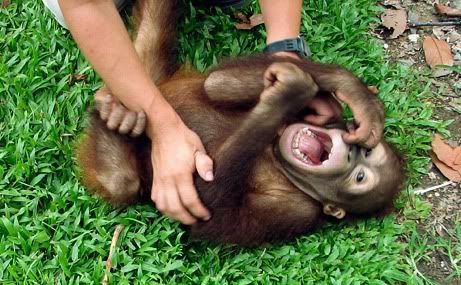
What happens if you tickle a gorilla?

By tickling young gorillas, chimpanzees, bonobos, and orangutans, researchers say they learned that all great apes laugh.

Their findings suggest we inherited our own ability to laugh from the last common ancestor from which humans and great apes evolved, which lived 10 to 16 million years ago.

Primatologist and psychologist Marina Davila Ross of the U.K.'s University of Portsmouth led a team that tickled the necks, feet, palms, and armpits of infant and juvenile apes as well as human babies. The team recorded more than 800 of the resulting giggles and guffaws.

Source

(via Boing Boing)

What happens if you tickle a gorilla?

By tickling young gorillas, chimpanzees, bonobos, and orangutans, researchers say they learned that all great apes laugh.

Their findings suggest we inherited our own ability to laugh from the last common ancestor from which humans and great apes evolved, which lived 10 to 16 million years ago.

Primatologist and psychologist Marina Davila Ross of the U.K.'s University of Portsmouth led a team that tickled the necks, feet, palms, and armpits of infant and juvenile apes as well as human babies. The team recorded more than 800 of the resulting giggles and guffaws.

Source

(via Boing Boing)

What happens if you tickle a gorilla?

By tickling young gorillas, chimpanzees, bonobos, and orangutans, researchers say they learned that all great apes laugh.

Their findings suggest we inherited our own ability to laugh from the last common ancestor from which humans and great apes evolved, which lived 10 to 16 million years ago.

Primatologist and psychologist Marina Davila Ross of the U.K.'s University of Portsmouth led a team that tickled the necks, feet, palms, and armpits of infant and juvenile apes as well as human babies. The team recorded more than 800 of the resulting giggles and guffaws.

Source

(via Boing Boing)

Friday, March 27, 2009

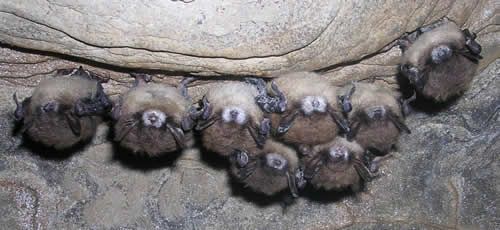
Are cavers spreading lethal bat disease?

The white fungus that appears on bats' noses and wings — so-called white-nose syndrome — has killed more than a half-million bats over the past three winters, but scientists had not been able to figure out how the fungus got into the bat caves and why it spread.

Now, they have big clue: Humans, specifically cavers, who "may be spreading the causative agent."

Source

Photo Credit: Nancy Heaslip, New York Dept. of Environmental Conservation
Little brown bats with white-nose syndrome, New York

Are cavers spreading lethal bat disease?

The white fungus that appears on bats' noses and wings — so-called white-nose syndrome — has killed more than a half-million bats over the past three winters, but scientists had not been able to figure out how the fungus got into the bat caves and why it spread.

Now, they have big clue: Humans, specifically cavers, who "may be spreading the causative agent."

Source

Photo Credit: Nancy Heaslip, New York Dept. of Environmental Conservation
Little brown bats with white-nose syndrome, New York

Friday, February 27, 2009

Any dog can bite but most don't

Dog bites happen, but they don't happen often, and many bites are preventable.

That message, delivered Thursday at a forum in Denver, was gleaned from data taken in Colorado over a year-long period.

The Coalition for Living Safely With Dogs, made up of Colorado veterinarians, animal-control officers, animal-care professionals and others presented the data at the group's second annual forum.

"The data shows that any dog can bite but most don't," said Nick Fisher, a coalition member.

The dog-bite surveys were taken from July 2007 to July 2008 and covered 17 "districts" in Colorado.

The coalition study tallied 2,060 bites. That's about 1 bite for every 350 dogs, less than one-third of one percent.

Of the 2,060 bites, Labrador retrievers made up the biggest percentage on the bite list.

Labs accounted for 13.3 percent of the reported bites; pit bulls, 8.4 percent; German shepherds, 7.8 percent; Rottweilers, 3.9 percent; and Chows, 3.5 percent.

Source

Any dog can bite but most don't

Dog bites happen, but they don't happen often, and many bites are preventable.

That message, delivered Thursday at a forum in Denver, was gleaned from data taken in Colorado over a year-long period.

The Coalition for Living Safely With Dogs, made up of Colorado veterinarians, animal-control officers, animal-care professionals and others presented the data at the group's second annual forum.

"The data shows that any dog can bite but most don't," said Nick Fisher, a coalition member.

The dog-bite surveys were taken from July 2007 to July 2008 and covered 17 "districts" in Colorado.

The coalition study tallied 2,060 bites. That's about 1 bite for every 350 dogs, less than one-third of one percent.

Of the 2,060 bites, Labrador retrievers made up the biggest percentage on the bite list.

Labs accounted for 13.3 percent of the reported bites; pit bulls, 8.4 percent; German shepherds, 7.8 percent; Rottweilers, 3.9 percent; and Chows, 3.5 percent.

Source

Funky fish found - the frogfish

A funky, psychedelic fish that bounces on the ocean floor like a rubber ball has been classified as a new species, a scientific journal reported. The frogfish — which has a swirl of tan and peach zebra stripes that extend from its aqua eyes to its tail — was initially discovered by scuba diving instructors working for a tour operator a year ago in shallow waters off Ambon island in eastern Indonesia.

Each time the fish strike the seabed, they push off with their fins and expel water from tiny gill openings to jet themselves forward. That, and an off-centered tail, causes them to bounce around in a bizarre, chaotic manner.

Photo credit: David Hall
Source

Funky fish found - the frogfish

A funky, psychedelic fish that bounces on the ocean floor like a rubber ball has been classified as a new species, a scientific journal reported. The frogfish — which has a swirl of tan and peach zebra stripes that extend from its aqua eyes to its tail — was initially discovered by scuba diving instructors working for a tour operator a year ago in shallow waters off Ambon island in eastern Indonesia.

Each time the fish strike the seabed, they push off with their fins and expel water from tiny gill openings to jet themselves forward. That, and an off-centered tail, causes them to bounce around in a bizarre, chaotic manner.

Photo credit: David Hall
Source

Monday, February 16, 2009

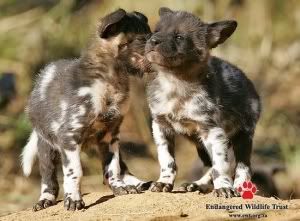
How cool is this? African wild dogs are foster moms

According to a study, published in the South African Journal of Wildlife Research, packs of African wild dogs showed a willingness to take in the orphaned pups, no questions asked.

In three different cases, a total of eleven orphaned African wild dog pups were released within view of a smaller than average wild pack. Each time, the pups were soon approached by the dominant female of that pack, and within minutes, the orphaned pups were adopted cared for and fed by the dominant female. In one case, the pups got scared and ran away from the pack, almost immediately. Yet even after such a brief introduction, the adoptive pack then began to scour the area to find the missing pups. Once reunited, the pups were greeted as if they were missing family members.

This study provides conservationists with a better understanding as to how they can use facilitated adoptions as a conservation tool in the wild.

via Oh, for the love of science!

How cool is this? African wild dogs are foster moms

According to a study, published in the South African Journal of Wildlife Research, packs of African wild dogs showed a willingness to take in the orphaned pups, no questions asked.

In three different cases, a total of eleven orphaned African wild dog pups were released within view of a smaller than average wild pack. Each time, the pups were soon approached by the dominant female of that pack, and within minutes, the orphaned pups were adopted cared for and fed by the dominant female. In one case, the pups got scared and ran away from the pack, almost immediately. Yet even after such a brief introduction, the adoptive pack then began to scour the area to find the missing pups. Once reunited, the pups were greeted as if they were missing family members.

This study provides conservationists with a better understanding as to how they can use facilitated adoptions as a conservation tool in the wild.

via Oh, for the love of science!

Thursday, February 12, 2009

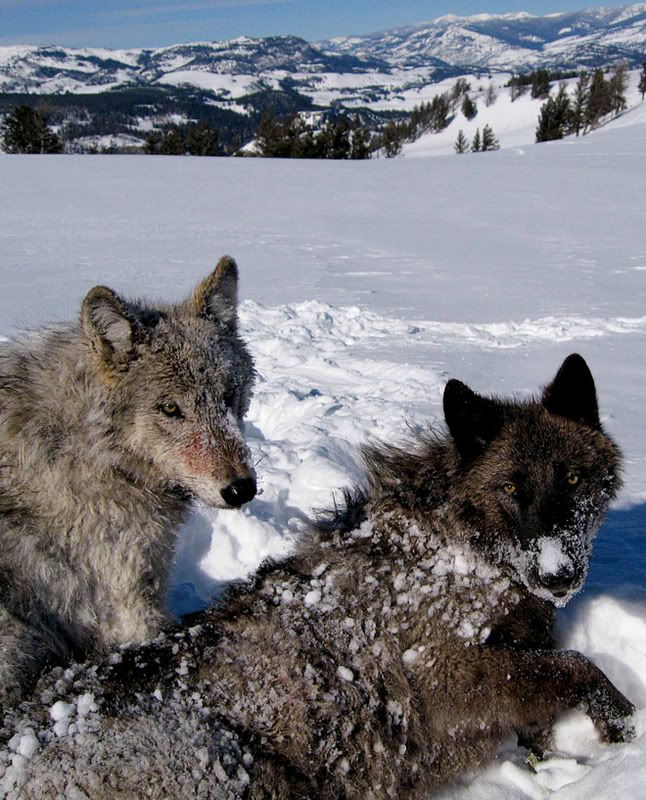
Black Wolves the Result of Interbreeding With Dogs

Biologist Tovi Anderson of Stanford University and her team compared the genes of wolves from Yellowstone National Park and the Canadian Arctic to those of domestic dogs and coyotes. They found that, in each species, the black individuals have the same mutation, which first arose about 45,000 years ago. And molecular-clock analysis showed the mutation was oldest in dogs, suggesting it originated with them and then spread to wolves and coyotes through interbreeding.

This all happened in North America, because there are no black wolves in Europe or Asia (except for an Italian population that has hybridized very recently with dogs). And wolves picked up the black-coat mutation in the distant past, perhaps 12,000-15,000 years ago, when people first crossed the Bering Land Bridge from Asia.

The black coat seems to provide an advantage to forest-dwelling wolves, meaning dogs passed on some useful genetic diversity to their wild cousins.

Source

Black Wolves the Result of Interbreeding With Dogs

Biologist Tovi Anderson of Stanford University and her team compared the genes of wolves from Yellowstone National Park and the Canadian Arctic to those of domestic dogs and coyotes. They found that, in each species, the black individuals have the same mutation, which first arose about 45,000 years ago. And molecular-clock analysis showed the mutation was oldest in dogs, suggesting it originated with them and then spread to wolves and coyotes through interbreeding.

This all happened in North America, because there are no black wolves in Europe or Asia (except for an Italian population that has hybridized very recently with dogs). And wolves picked up the black-coat mutation in the distant past, perhaps 12,000-15,000 years ago, when people first crossed the Bering Land Bridge from Asia.

The black coat seems to provide an advantage to forest-dwelling wolves, meaning dogs passed on some useful genetic diversity to their wild cousins.

Source

Tuesday, February 10, 2009

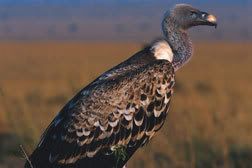
Imagine a world without vultures

Constance Casey at Slate theorizes a world without vultures in "Vulture World".

A mysterious die-off of Asian white-backed vultures has led to a pileup of domestic animal carcasses and an increase in the population of rodents and feral dogs. It turned out that an anti-inflammatory drug—diclofenac—used on sick livestock kills vultures even in low doses. Though the Indian government is phasing out the veterinary use of the drug, the vulture population hasn't rebounded. One social consequence has been that members of the Zoroastrian Parsi community, who have used vultures to dispose of human corpses, now have to cremate their dead.

These are fascinating birds. Read more.
Related Posts with Thumbnails
 
PETS